
In high-pressure, high-temperature (HPHT) environments, conventional well engineering approaches are often not enough.
The combination of narrow drilling margins, abnormal pressures, elevated temperatures and complex well behaviour creates significant challenges across well design, drilling, well control, integrity and completion operations.
Successfully delivering an HPHT well requires more than understanding individual engineering disciplines. Engineers must be able to assess how pressure and temperature affect the behaviour of gases, liquids, metals and elastomers, while making sound decisions around well design, casing, drilling fluids, rig equipment, well control and well integrity.
SEMARAK Training’s Advanced HPHT Well Engineering course is designed to provide drilling and completion engineers with a comprehensive understanding of the complexities associated with HPHT well design, drilling and completion operations. Delivered through a scenario-based approach, the five-day programme combines technical theory, practical exercises and a real-world case to help participants develop practical experience in addressing HPHT challenges.
From HPHT Well Design to Operational Execution
This five-day programme takes participants through the key technical and operational considerations involved in designing, drilling and completing HPHT wells.
The programme begins with the HPHT environment, including geological aspects, abnormal pressures and the behaviour of gases, liquids, metals and elastomers under elevated pressures and temperatures. Participants then progress into well design, covering pore and fracture pressures, well trajectories, casing design, wellheads, cementing, drilling fluids, drillstring design and contingency planning.
The course also examines the rig and equipment requirements for HPHT operations, including BOP specifications, HPHT choke manifolds, mud gas separator sizing, mud coolers, hydraulics and ECD, solids control, barite sag, fluid compressibility, gas solubility and well fingerprinting.
Operational challenges are addressed through dedicated sessions on HPHT well control, ballooning and wellbore breathing, temperature monitoring, drilling and tripping, MWD/LWD, casing and cementing, well integrity and managed pressure drilling.
The final stage focuses on well evaluation and completions, including logging and coring operations, well testing, material selection and metallurgy, wellhead seals, HPHT completions, tubing movement, flow control equipment, sand production, erosion, reservoir depletion and workovers.
What You Will Gain
Through this course, participants will develop the ability to:
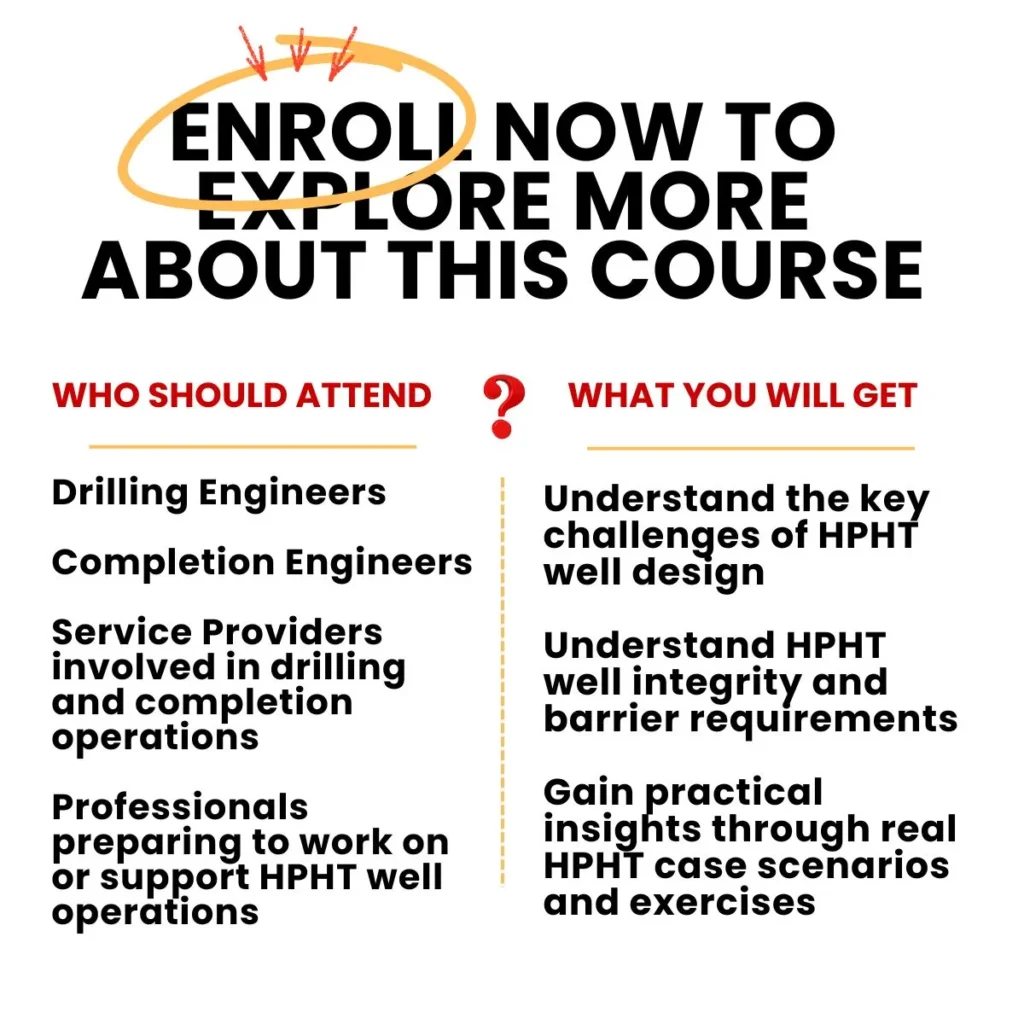
- Understand the key challenges and complexities associated with HPHT well design and drilling operations
- Assess the impact of high pressures and temperatures on well behaviour and well components
- Apply HPHT well design principles, standards, procedures and guidelines
- Evaluate pore pressure, fracture pressure and pressure ramp considerations
- Understand casing, connections, wellhead and cementing requirements for HPHT wells
- Assess drilling fluid challenges, drillstring design and hydraulics in HPHT environments
- Understand rig and surface equipment requirements for HPHT operations
- Apply practical well control principles to on-bottom, off-bottom and out-of-hole scenarios
- Assess well integrity requirements, barriers, leaks, corrosion and annular pressure
- Understand operational challenges associated with ballooning, wellbore breathing and supercharging
- Evaluate HPHT well testing, logging, coring and completion considerations
- Understand material selection and metallurgy requirements for tubing and wellheads
- Explore the impact of sand production, erosion, reservoir depletion and workovers on HPHT completions
Participants will also work through practical exercises throughout the programme, including gas and density calculations, tubular expansion, drillstring design, fluid challenges, temperature calculations, barite requirements, gas solubility, well control and dual-gradient calculations.
Learn Through Scenario-Based Training and Real-World Experience
HPHT well engineering cannot be fully developed through theory alone.
This course uses a scenario-based approach, allowing participants to work through a real case and examine the technical, operational and practical challenges associated with HPHT wells. The approach is designed to connect theoretical principles with real-world decision-making and provide participants with practical experience in understanding HPHT issues.
Exercises are integrated throughout the programme, giving participants opportunities to apply engineering concepts to calculations, well design, drilling, well control and completion scenarios.
Who Should Attend?
This programme is primarily intended for:
- Drilling engineers
- Completion engineers
- Service providers who are about to be exposed to HPHT drilling operations
- Professionals seeking to strengthen their understanding of HPHT well engineering complexities
Participants are expected to have an existing understanding of conventional well design and drilling operations.
Take Your HPHT Well Engineering Expertise Further
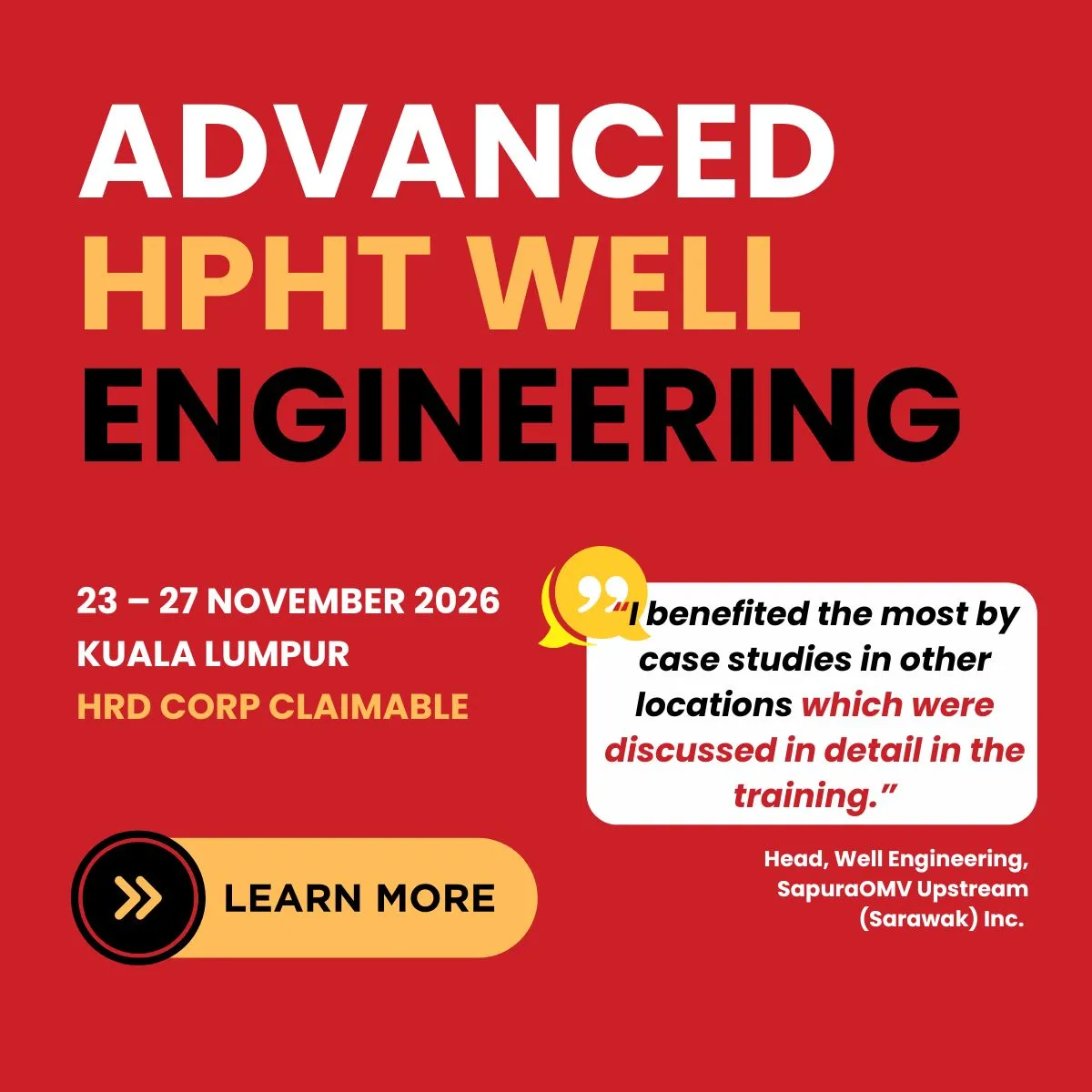
Course: Advanced HPHT Well Engineering
Date: 23–27 November 2026
Duration: Five days
Venue: Kuala Lumpur
This programme is HRD Corp claimable.
If your role involves drilling, completions or well engineering, this course will help you strengthen the knowledge required to design HPHT wells, evaluate operational challenges, manage well control and integrity risks, and support safer and more reliable HPHT well delivery.
Download the course brochure for the full programme, fees and registration details: