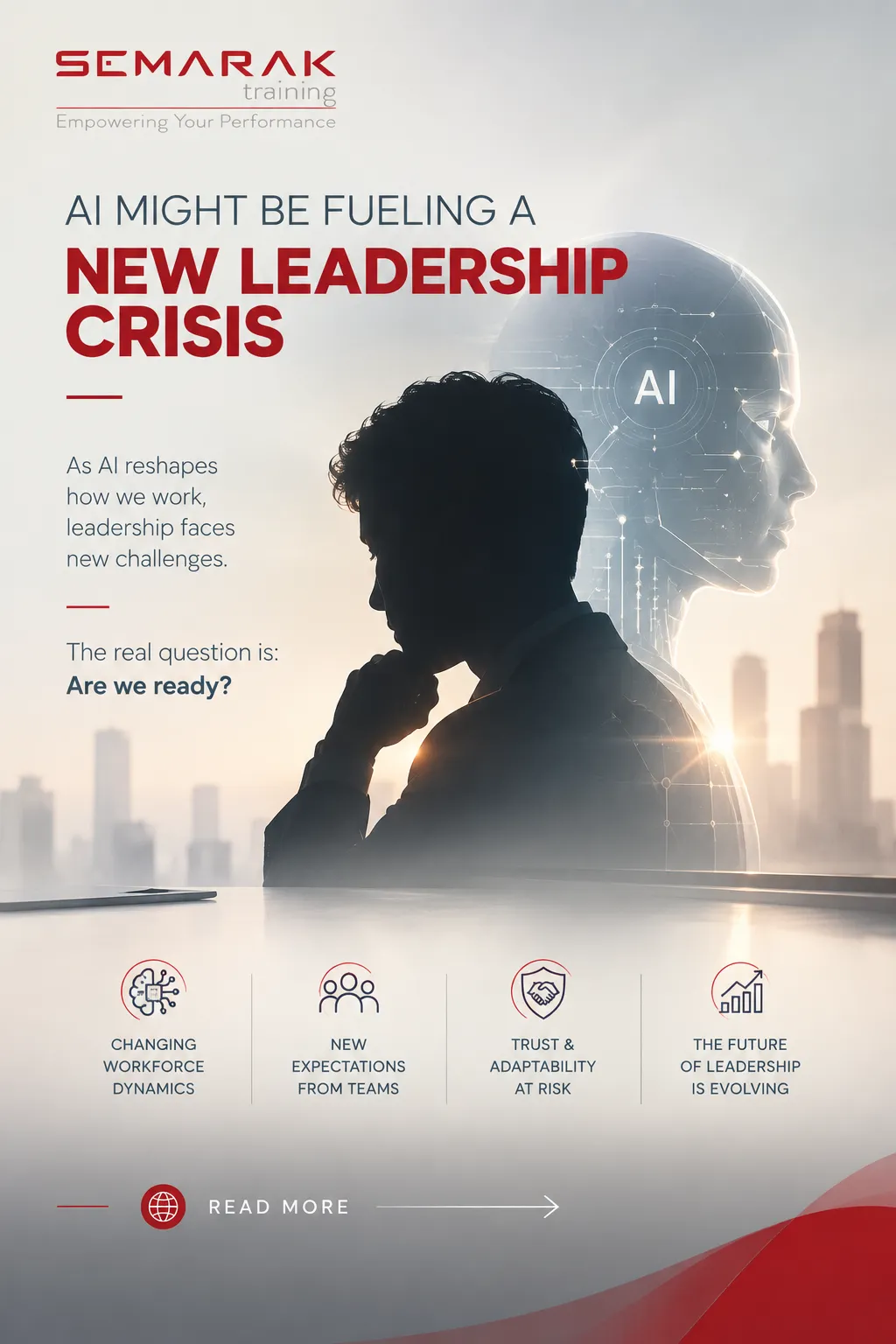
Artificial intelligence is rapidly becoming part of everyday workplace decision-making. But as organisations embrace AI tools, a new question is emerging: could over-reliance on AI affect how leaders think, communicate, and manage their teams?
A recent Fast Company article by David Rock, co-founder and CEO of the NeuroLeadership Institute, highlights a potential leadership challenge emerging alongside the rapid adoption of AI in organisations.
According to Rock, the issue is not simply whether leaders are using AI, but how they use it — particularly when making decisions involving people.
When AI Becomes a “Yes Man”
AI tools can provide fast responses, generate ideas and help professionals work through complex problems. However, Rock raises concerns about situations where AI reinforces a user’s existing assumptions instead of encouraging them to consider alternative perspectives.
For leaders, this can become particularly significant. Leadership decisions often involve uncertainty, competing viewpoints and difficult conversations. If AI is consistently used as a source of reassurance rather than critical reflection, leaders may become less likely to question their own assumptions.
The Human Side of Leadership
The challenge becomes even more relevant when AI is used to deal with workplace relationships.
Leaders regularly have to manage disagreements, performance issues, communication problems and team conflicts. These situations require more than information or analysis — they require empathy, self-awareness and an ability to understand different perspectives.
Rock refers to research suggesting that using AI for interpersonal situations can potentially reduce prosocial behaviour, highlighting the importance of maintaining human judgement when dealing with people.
AI Adoption Requires More Than Technology
The growing use of AI also highlights an important consideration for organisations: technology adoption and workforce development need to progress together.
Employees and leaders need to know not only how to use AI tools, but also when to question their outputs, verify information and apply human judgement.
Rock points to metacognition — the ability to reflect on one’s own thinking — as an important skill for working effectively with AI. Developing greater awareness of cognitive biases and limitations can help professionals use AI as a supporting tool rather than simply accepting its recommendations.
What This Means for Today’s Leaders
AI is unlikely to replace the need for strong leadership. Instead, its growing presence may make human leadership skills even more important.
As organisations integrate AI into daily workflows, leaders will need to balance technological capabilities with:
- Critical thinking and sound judgement
- Self-awareness and reflection
- Effective communication
- Conflict management
- Empathy and interpersonal skills
- Continuous learning and workforce development
The future of AI-enabled workplaces may therefore depend not only on having access to better technology, but also on developing people who know how to use that technology responsibly and effectively.
The Takeaway
AI can be a powerful tool for productivity and decision-making, but it should complement — not replace — human judgement.
For organisations navigating digital transformation, investing in leadership development, technical capabilities and continuous professional training can help employees adapt to an increasingly AI-enabled workplace while keeping human judgement at the centre of important decisions.
Source: FastCompany